ISRAEL’S RIGHT TO EXIST? Michigan Democrat Abdul El-Sayed Gives Conditional Answer on ‘60 Minutes’ Days Before Crucial Senate Election

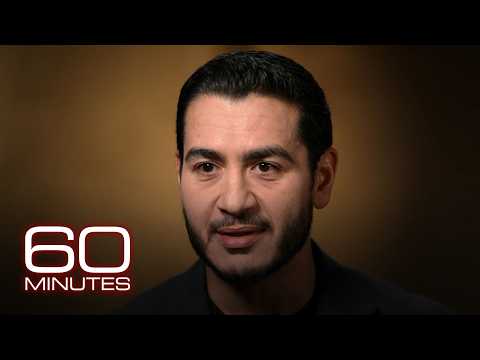
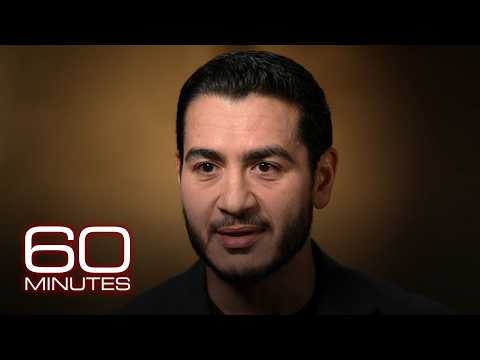
[Video below.] Michigan Democratic Senate nominee Abdul El-Sayed has sparked fresh controversy just two days before the midterm elections after declaring during a nationally televised interview that Palestine has a right to exist while attaching conditions to his recognition of Israel’s right to exist.
The exchange aired Sunday evening on CBS’s “60 Minutes,” where correspondent Ross Douthat interviewed El-Sayed and his Republican opponent, Mike Rogers, in one of the country’s most closely watched Senate contests. The discussion exposed a sharp disagreement between the candidates over Israel, American foreign aid, and the future of the Middle East.
Asked whether Israel has a right to exist, El-Sayed initially redirected the discussion toward Palestinian statehood, questioning why he is repeatedly asked about Israel without being asked the equivalent question about Palestinians.
Douthat responded by asking whether Palestine has a right to exist. El-Sayed answered affirmatively and without qualification.
When Douthat then returned to the question of Israel, El-Sayed began to answer yes but immediately introduced a condition, saying, “If there is a shared understanding–”
The interviewer interrupted to challenge the distinction, prompting El-Sayed to elaborate on his position. The Democratic candidate argued that the question should be approached through the principles of equal rights and national self-determination rather than through the interests of either side.
El-Sayed explained that he supports peace, dignity, and self-determination for Palestinians and Jewish Israelis alike. He said he would support a two-state arrangement if both populations agreed to it on equal terms, but would also accept a single shared state if that were the outcome they chose.
The exchange immediately drew attention because El-Sayed had offered an unequivocal affirmative answer regarding Palestinian statehood while making his recognition of Israel contingent on a mutually agreed political arrangement. His comments also left open the possibility of replacing the existing two-state framework with a single state.
The issue has followed El-Sayed throughout his Senate campaign. During a July appearance on CNN, anchor Kasie Hunt repeatedly pressed him on whether Israel has a right to exist, but he declined to provide a straightforward answer, instead arguing that the more relevant question was whether Israel was entitled to American taxpayer funding.
At a campaign event organized by Jewish supporters earlier this year, El-Sayed also expressed difficulty with the concept of Israel’s right to exist specifically as a Jewish state, raising questions about how such a state should be defined.
Rogers, a former Republican congressman and FBI agent, offered a sharply different position during his own “60 Minutes” interview.
“I passionately defend Israel’s right to defend itself and to exist as a Jewish state. That sets me at odds with my opponent right off the bat. He refuses to even acknowledge that Israel has the right to exist,” Rogers said.
El-Sayed also used the interview to condemn American military assistance to Israel, arguing that Washington’s support for a two-state solution was inconsistent with providing weapons to an Israeli government he accused of undermining Palestinian statehood.
He maintained that American taxpayers should not be financing weapons for foreign governments, naming Israel, Egypt, Saudi Arabia, and Pakistan among the countries he believes should not receive such assistance.
The Democratic nominee additionally accused Israel of committing genocide in Gaza, an allegation rejected by the Israeli government. Rogers criticized El-Sayed’s language and defended Israel’s military response to the October 7, 2023, Hamas terrorist attacks.
The dispute carries particular political significance in Michigan, which has one of the country’s largest Arab-American populations as well as a substantial Jewish electorate. CBS estimated that the state has approximately 100,000 Jewish voters and more than 200,000 Arab Americans, making Middle East policy an unusually prominent issue in the Senate race.