Chareidi Prisoner Denied Visit to Dying Mother, Released Only After Her Petirah

A 24-year-old chareidi man from Yerushalayim spent four months in an Israeli military prison while his seriously ill mother lay dying, with repeated requests to allow him to visit her reportedly rejected by military authorities. By the time he was finally released, his mother had passed away, leaving him unable to see her or say goodbye during her final days.
The disturbing account concerns Moshe Levy, a resident of the Neve Yaakov neighborhood, who was imprisoned after attempting to resolve his military service status and obtain an exemption on medical grounds.
According to the report, Levy traveled to the Tel Hashomer military induction center on the advice of his attorney, bringing psychiatric documentation intended to support his request for an exemption. Instead of receiving the exemption he had sought, he was taken into custody and transferred to a military detention facility.
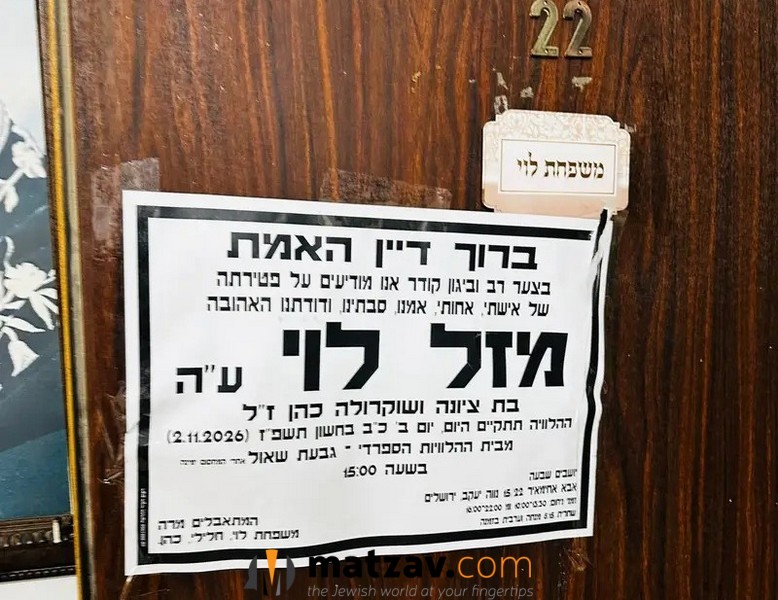
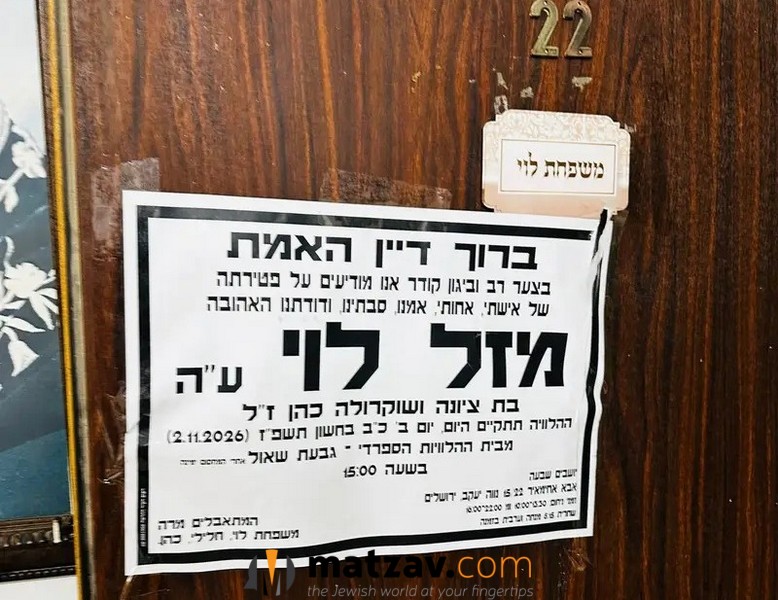
At the time of his arrest, Levy’s mother, Mazal Levy a”h, was already suffering from a serious illness. His family initially hoped he would be permitted to return home for Rosh Hashanah and Yom Kippur, but those requests were unsuccessful.
As the weeks passed, his mother’s condition deteriorated further. She was eventually hospitalized, and her health declined to the point that doctors considered her condition critical.
According to Levy’s account, his mother repeatedly asked about him even as she became increasingly weak and struggled to speak. She wanted to know where her son was and why he had not come to see her.
Of her seven sons, six were able to remain at her side during her final illness. Moshe was the only one absent, confined to military prison.
The family continued appealing to military officials, submitting medical records and special requests seeking permission for Levy to leave the facility temporarily, even for a brief visit to his mother’s hospital bedside.
Those appeals were reportedly denied, including when her condition became life-threatening. As a result, Levy remained in custody throughout the final stages of his mother’s illness.
The tragedy reached its devastating conclusion on the day of her petirah. At approximately noon, one of Levy’s commanding officers approached him and indicated that something was wrong at home, instructing him to contact his brother.
Rather than informing Levy directly that his mother had died, the officer left him to learn the news from his family.
When Levy called his brother, he discovered that his mother had already passed away and that the family was preparing to leave for the levayah within minutes.
Only then, after four months of imprisonment and the death of the mother he had repeatedly asked to visit, did military authorities inform Levy that he could leave the prison and return home.
Initially, Levy was told that his release would last only through the shivah and that he would be required to report back to military prison afterward.
His attorney objected, arguing that there was no justification for forcing the grieving son to resume his imprisonment following his mother’s death. After further intervention by the lawyer, Levy was released without a requirement to return immediately after the mourning period.
However, his difficulties with the military authorities have not ended. Levy says his military status remains unresolved and that he continues to be classified as a draft evader. According to information he received from military officials, another arrest could expose him to more severe punishment.
Additional reporting by JDN indicates that the family had also sought assistance from hospital personnel and that requests for special leave were reportedly submitted by officers within the detention facility. Those efforts, according to the accounts, were likewise unsuccessful.
The case has attracted attention in the Israeli chareidi media amid the continuing controversy surrounding the arrest and imprisonment of yeshiva students over military conscription.