Yerushalayim Posek Warns Against Human-Shaped Dolls, Including Children's Toys and Silver Figurines

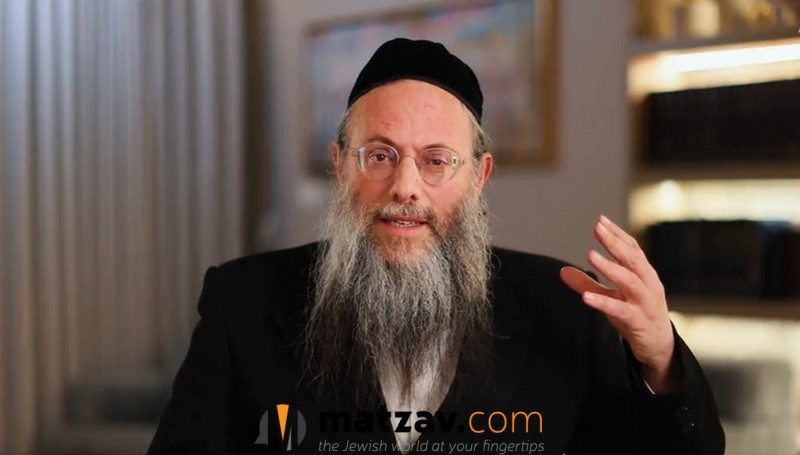
A new halachic ruling concerning children’s dolls and decorative figurines has sparked discussion among rabbonim and families, after Rav Chaim Aharon Bleier, a prominent posek in the Minchas Yitzchok neighborhood of Yerushalayim, warned that certain human-shaped dolls may be prohibited under the halachos governing the creation and possession of human images.
In an article published in his weekly halachic publication, Chukei Chaim, Rav Bleier examined the longstanding prohibition against creating a complete three-dimensional representation of a human being, explaining that the issue extends beyond statues and decorative sculptures to include ordinary children’s toys.
Rav Bleier has devoted his recent publications to several halachic questions associated with the prohibition of avodah zarah, including the printing of images of the sun and other representations addressed by the poskim. His latest discussion focused specifically on the prohibition of fashioning human forms and the circumstances under which such objects may be kept in a Jewish home.
Citing the Shulchan Aruch and other halachic authorities, Rav Bleier explained that producing a complete human figure can violate the prohibition against making certain images, even when the object is not intended for worship.
He further noted that the prohibition cannot necessarily be avoided by having a non-Jew manufacture the object on behalf of a Jew. According to the ruling, commissioning such an item may itself present a halachic problem, and additional restrictions can apply to keeping the completed figure in one’s possession.
Addressing the common practice of purchasing dolls for children, Rav Bleier distinguished between toys that are routinely handled and discarded on the floor and ornamental figures that are carefully preserved and prominently displayed.
He wrote that a children’s doll made in the complete form of a human being is, in principle, subject to the halachic prohibition. Nevertheless, he cited authorities who permit retaining such dolls when they are used in a manner considered degrading or undignified, rather than treated as objects of importance.
For example, dolls that children regularly throw on the floor, leave scattered around the house and handle without special care may fall within this leniency, according to the opinions he cited.
Rav Bleier emphasized, however, that this allowance does not necessarily apply to every doll, and that the manner in which an item is used and displayed is an important consideration.
A more stringent ruling applies to decorative silver figurines depicting complete human beings, particularly those placed in display cabinets or vitrines as household ornaments.
Because such figures are maintained in a place of honor and are not treated casually or disrespectfully, Rav Bleier ruled that they may not be kept in the home, even if they were originally manufactured by a non-Jew.
The distinction means that an ordinary child’s doll and a silver human figurine may be subject to different practical rulings, despite both depicting the human form.
Rav Bleier also addressed the circumstances under which the objects were manufactured, explaining that a separate halachic concern arises when a Jew produces a prohibited figure or specifically commissions a non-Jew to make one.
In such cases, he wrote, the initial production of the object may have involved a prohibition, raising an additional question about purchasing it.
According to his ruling, even if the finished doll will subsequently be used by children in a manner that would ordinarily qualify for the leniency concerning degrading treatment, purchasing an item produced through a prohibited act may raise concerns involving the prohibition of lifnei iver, which forbids facilitating another person’s transgression.
The posek therefore cautioned against assuming that the permissibility of keeping a doll already in the home automatically means that purchasing a newly manufactured doll is permitted under all circumstances.