Hakeem Jeffries Moves to Take House Gavel Following Democratic Midterm Victory

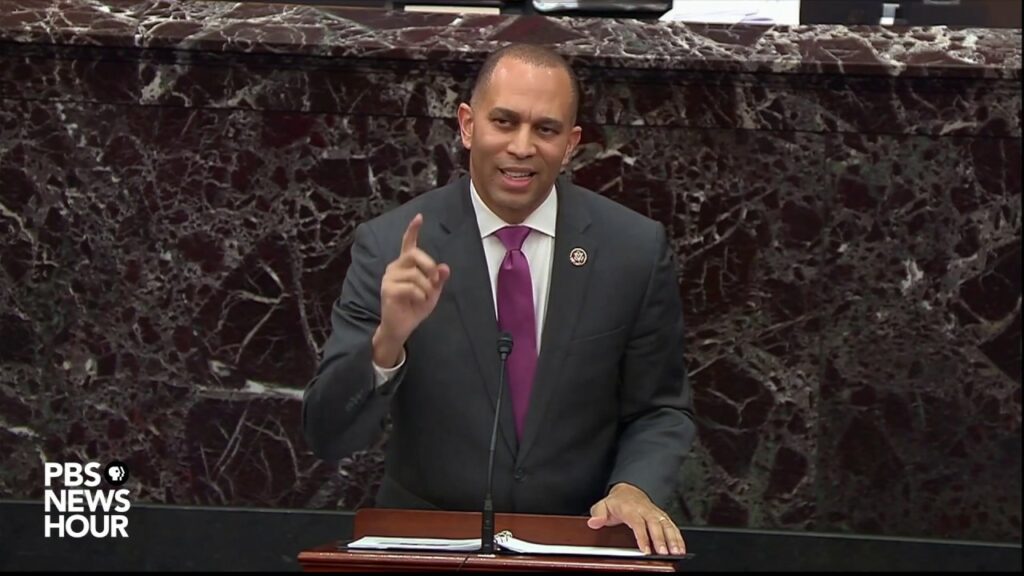
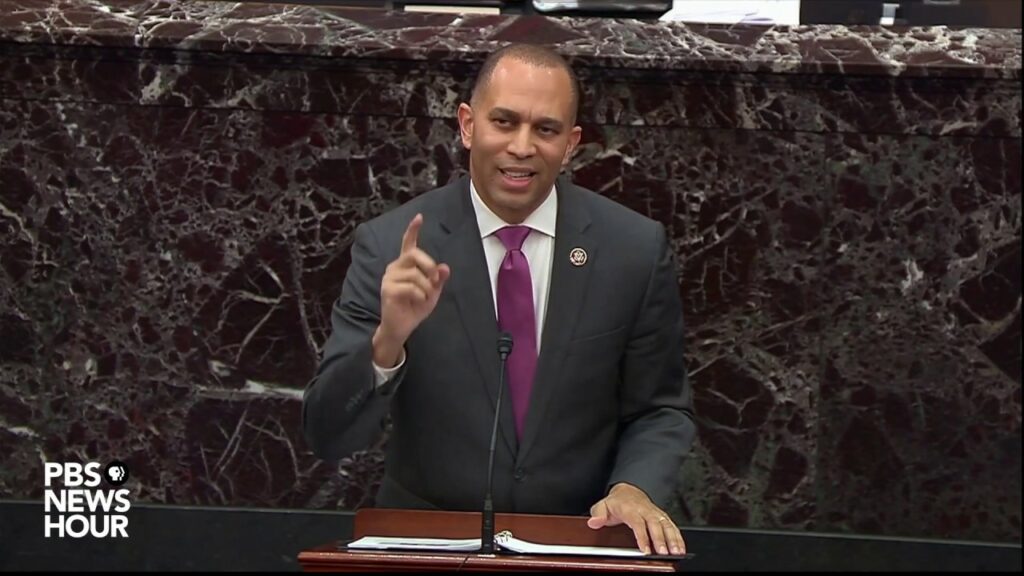
House Democratic leader Hakeem Jeffries of New York announced Wednesday that he is seeking to become the next speaker of the House of Representatives, moving to secure the chamber’s top leadership position following the Democratic Party’s victory in Tuesday’s midterm elections.
Jeffries formally launched his candidacy in a letter circulated to Democratic lawmakers, asking for their support as the party prepares to take control of the House in the new Congress.
“I write to humbly request your support in connection with my candidacy to serve as the next Speaker of the House of Representatives,” Jeffries wrote in the letter, which was obtained by Axios.
The New York Democrat argued that his party’s electoral success gives it a responsibility to pursue substantial changes in Washington and respond to voters’ concerns.
“We must now deliver the dramatic change the American people are demanding in the majority,” he wrote.
Jeffries, who entered Congress in 2013 after winning his first election in 2012, has led House Democrats since 2023, succeeding Nancy Pelosi in the party’s top leadership role after she stepped aside following the 2022 elections.
If elected speaker, Jeffries would become the first Black lawmaker in American history to hold the position.
In his appeal to colleagues, Jeffries promised that “every single member of our majority will play a meaningful role” in shaping the party’s legislative agenda.
He also outlined three priorities for the incoming Democratic majority, pledging to help lawmakers “act decisively in three key areas: (1) Affordability (2) Accountability and (3) American Values.”
Although Jeffries is widely regarded as the leading candidate for speaker, his election is not yet guaranteed.
Axios reported that several newly elected Democrats, including progressive lawmakers and representatives from districts that traditionally favor Republicans, have not committed to supporting him.
Nevertheless, Jeffries is expected to face limited resistance within the Democratic caucus. The party’s reported gains in Tuesday’s elections could also provide him with greater flexibility in securing the votes necessary to win the speakership.
The size of the Democratic victory may prove especially important in determining how much influence the party’s progressive wing can exercise over Jeffries. Some incoming left-wing lawmakers had hoped to use a narrow majority to demand votes on proposals involving healthcare, immigration enforcement, and restrictions on American aid to Israel. A larger Democratic majority would make it considerably more difficult for a small group to pressure party leadership.
Democrats are projected to hold a commanding majority, with some estimates placing their eventual total at approximately 255 seats. The party captured districts that had strongly supported President Trump, expanding its gains well beyond the competitive races that had initially been expected to determine control of the House.
Jeffries also received a public endorsement from Pelosi, who congratulated him following the election and expressed confidence in his ability to lead the chamber.
Meanwhile, Republican Speaker Mike Johnson announced that he would not seek another term as his party’s House leader following the election defeat. His decision has opened the way for a Republican leadership contest, with Majority Leader Steve Scalise and Judiciary Committee Chairman Jim Jordan among the prominent figures being discussed.
The new Congress is scheduled to convene on January 3, 2027, when House members will formally elect their speaker. Jeffries must still secure the necessary votes on the House floor before assuming the position.