Shas Backs Netanyahu, UTJ Refuses to Endorse Anyone as Herzog Weighs Next Government

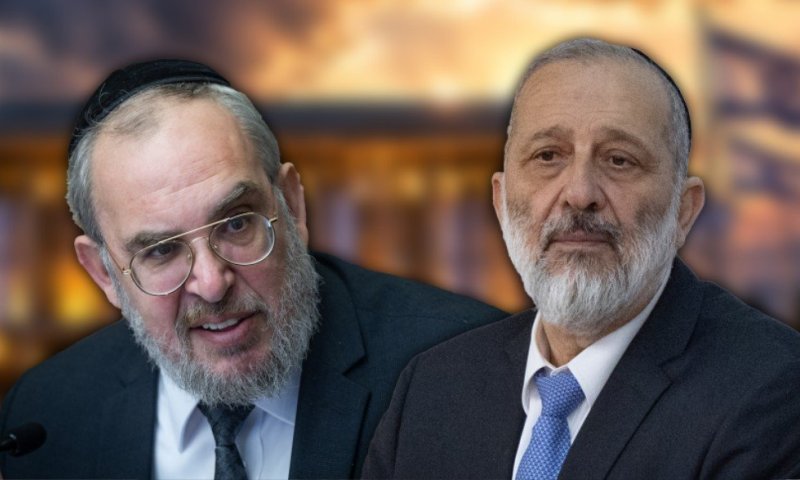
Israel’s chareidi parties adopted sharply different positions Wednesday as President Isaac Herzog began consultations over the formation of the next government, with Shas formally endorsing Prime Minister Binyamin Netanyahu while both Degel HaTorah and Agudas Yisroel decided not to recommend any candidate until the status of yeshiva bochurim is addressed.
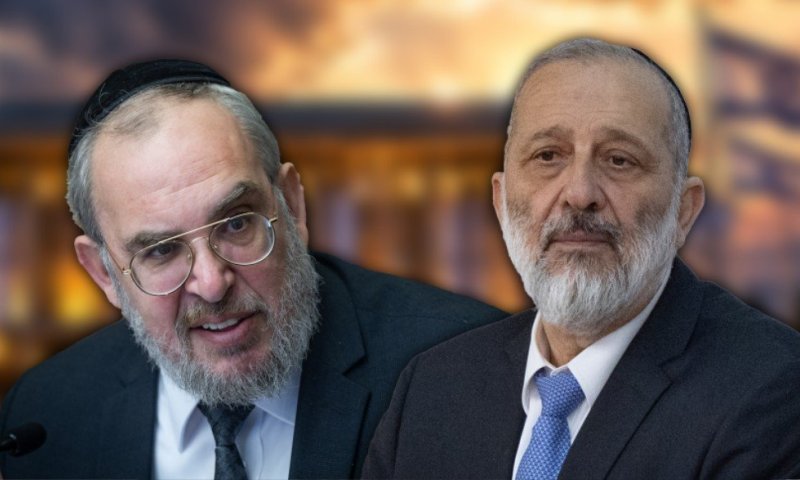
The developments came amid intense efforts by Netanyahu and Yashar chairman Gadi Eisenkot to secure enough support to receive the mandate to form a government following last week’s Knesset elections. The unresolved military draft issue remains central to the chareidi parties’ calculations, while Shas chairman Aryeh Deri announced that he would remain at the helm of his party after the Moetzes Chachmei HaTorah rejected his request to step down.
Herzog opened the consultation process Wednesday afternoon, with representatives of the smaller Knesset factions appearing first and the larger parties scheduled for the conclusion of the proceedings.
Shas representatives, led by Michael Malkieli, subsequently informed Herzog that the party was endorsing Netanyahu in accordance with the instructions of the Moetzes Chachmei HaTorah. Malkieli criticized the treatment of the chareidi community during the outgoing government’s term, while Herzog raised the possibility of reaching an agreement on the draft issue as part of a broader coalition arrangement.
Malkieli emphasized that Shas was not ruling out a national unity government, although its official recommendation remained Netanyahu.
Yisrael Beiteinu, meanwhile, endorsed Eisenkot. Party chairman Avigdor Lieberman made clear that supporting Eisenkot for prime minister did not mean agreeing to a minority government dependent on Arab parties. Ra’am also announced its intention to recommend Eisenkot, while Zehut joined the parties backing Netanyahu.
A major development unfolded within Shas itself after Deri, who had largely remained out of public view since the election, informed senior rabbonim that he wished to withdraw from political life.
Shas suffered a severe electoral setback, dropping from 11 Knesset seats to six, prompting questions about the party’s leadership and future direction. However, the Moetzes Chachmei HaTorah issued a directive, published Wednesday evening in the Shas-affiliated newspaper Haderech, instructing Deri to remain chairman.
Deri subsequently issued his first public response since the election, declaring, “All my life I was raised and educated to obey Daas Torah,” and stating that he accepted the rabbonim’s decision “without hesitation or doubt.”
Deri also visited the home of Rav Moshe Maya, the senior member of the Moetzes Chachmei HaTorah, in a meeting attended by Rav Shmuel Betzalel. Photographs from the visit marked Deri’s first public appearance since the election.
The Shas chairman announced that he would convene the party’s Knesset members and senior municipal representatives Thursday for a meeting devoted to examining the election results and determining the movement’s next steps.
Although Deri will remain party chairman, he is considering relinquishing his Knesset seat while continuing to direct Shas from outside parliament.
Another noteworthy development came from Rav Moshe Maya, who indicated that Shas could consider a unity government involving both Netanyahu and Eisenkot, despite the party’s formal endorsement of Netanyahu.
In an interview with Mishpacha, Rav Maya said a rotation arrangement between the two political leaders could produce an excellent government. A recording broadcast Wednesday evening by i24NEWS further indicated that he was open in principle to a rotation agreement, provided legislation was enacted to protect the status of yeshiva students.
The remarks suggested that Shas’s recommendation of Netanyahu did not necessarily rule out participation in a broader coalition that included Eisenkot.
Meanwhile, the leadership of United Torah Judaism reached a significant decision of its own, declining to recommend Netanyahu or Eisenkot during the presidential consultations.
In Degel HaTorah, Rav Dov Landau and Rav Moshe Hillel Hirsch instructed the party’s representatives to withhold their endorsement from both candidates. The decision followed growing frustration over the failure to pass legislation securing the status of yeshiva bochurim.