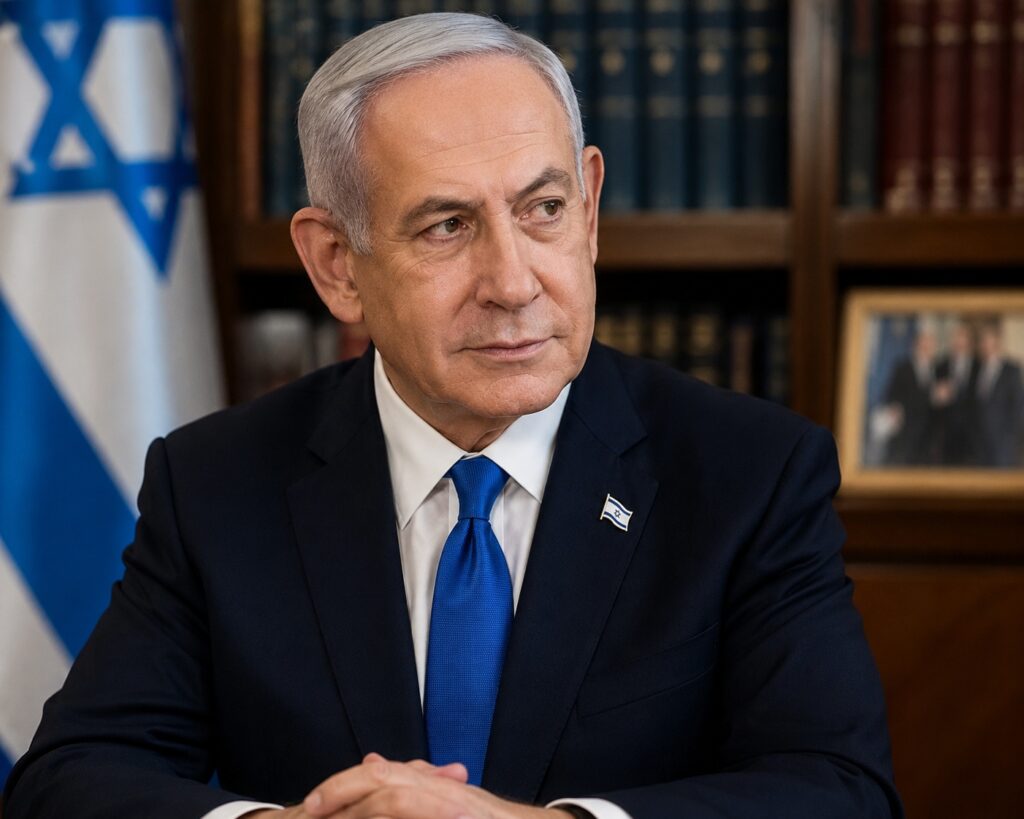
First Post-Election Poll Shows Right-Wing Bloc Rising to 54 Seats as Israelis Favor Unity Government

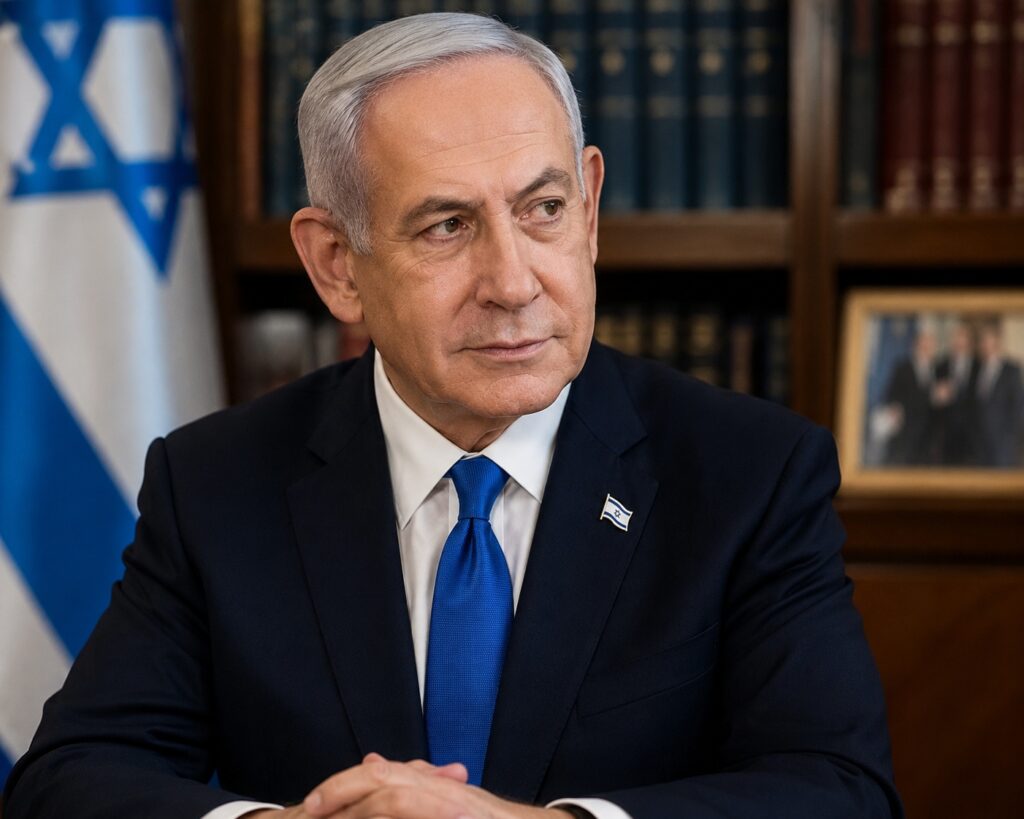
A new Israeli poll released Tuesday evening shows Prime Minister Binyamin Netanyahu’s Likud party gaining strength following last week’s inconclusive election, while a clear majority of Israelis oppose the formation of a minority government led by Gadi Eisenkot that would depend on Arab parties for parliamentary support.
The survey, conducted for i24NEWS, projects 54 Knesset seats for Netanyahu’s right-wing and chareidi bloc, compared with 48 for parties aligned with Eisenkot and 18 for the Arab parties. The results come as political leaders continue exploring possible coalition arrangements amid the prospect of another election.
The poll carries particular interest because i24NEWS produced the election-night projection that reportedly came closest to the actual results of the October 27 election.
According to the new findings, Likud would emerge as the largest party with 28 seats, an increase of one mandate, while Eisenkot’s Yashar! party would finish second with 20 seats.
The Beyachad party would receive 12 seats, followed by the Joint List with 11. The Democrats and Avigdor Lieberman’s Yisrael Beiteinu would each secure eight seats.
Among the chareidi parties, both United Torah Judaism and Shas would receive seven mandates apiece. Ra’am would also win seven seats, while Religious Zionism–Zehut and Otzma Yehudit would each receive six.
The projected distribution would leave Netanyahu’s bloc seven seats short of the 61 required for a Knesset majority, meaning that even with its improved standing, the right-wing camp would still need support from outside its traditional alliance to establish a government.
The survey also examined public attitudes toward the competing proposals for forming a government, revealing substantial opposition to an Eisenkot-led minority coalition dependent on Arab parties.
A decisive 74% of respondents said they opposed such an arrangement, while 22% supported it. The proposed government would include Ra’am, headed by Mansour Abbas, and depend on the Joint List either abstaining or providing outside parliamentary support.
By contrast, 60% expressed support for a unity government headed by Netanyahu that would bring together Likud, Eisenkot’s Yashar!, Beyachad and Religious Zionism. Another 34% opposed the proposal.
That proposed unity arrangement would be tied to commitments on four divisive issues: chareidi military enlistment, establishing a state commission of inquiry, ending Netanyahu’s criminal trial and advancing a judicial reform agreement.
When respondents were asked to select their preferred political outcome, however, the results were considerably more divided. Some 34% favored holding another election, while an identical 34% preferred a unity government under Netanyahu.
Only 16% selected an Eisenkot-led minority government, while 14% favored a unity coalition headed by Eisenkot.
The poll was conducted on November 2 by Direct Polls, headed by Tzuriel Sharon, for i24NEWS. It surveyed 559 Israeli adults using a digital polling system and respondent panel, with a reported margin of sampling error of 4.1 percentage points.
The findings arrive before the parties’ consultations with President Isaac Herzog, who will be tasked with determining which Knesset member has the best prospect of assembling a governing coalition. With neither major bloc approaching a parliamentary majority on its own, the negotiations could determine whether Israel establishes a unity government or returns to the polls.