Likud MK Says Eisenkot Cannot Form Coalition With Chareidim and Arab Parties, Predicts Unity Government or New Elections

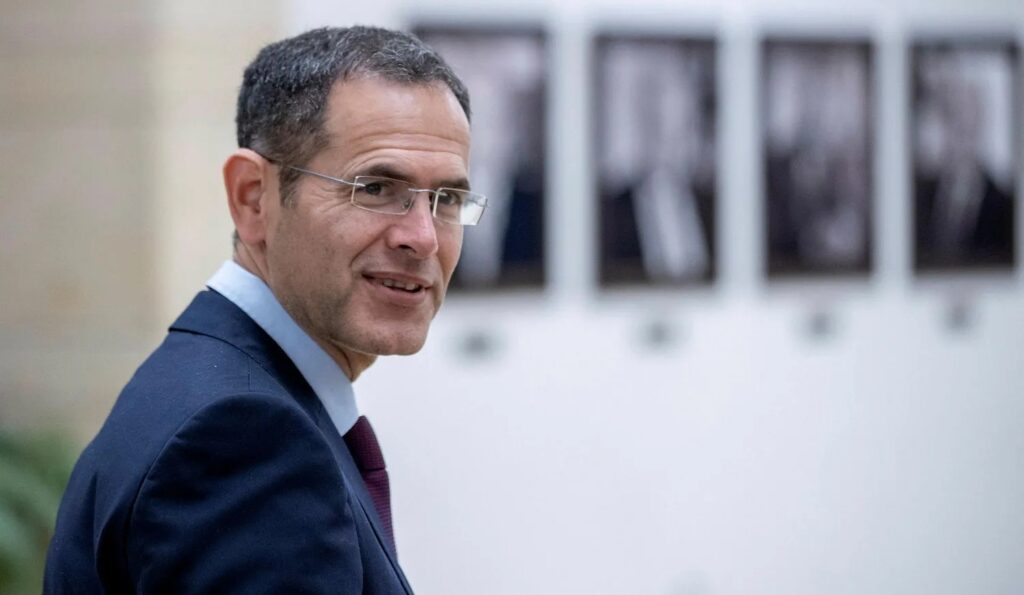
Likud MK Moshe Saada is dismissing the possibility of an alternative Israeli government bringing together opposition parties, chareidi factions, and Arab parties, claiming that even members of Gadi Eisenkot’s own Yashar party are unwilling to support such an arrangement.
In an interview with Arutz Sheva, Saada said he had personally spoken with individuals in Eisenkot’s party who made clear that they would oppose a coalition dependent on Arab political factions. He argued that the opposition lacks a realistic path to forming a government and will ultimately have to choose between joining a broad coalition headed by Prime Minister Binyamin Netanyahu and returning to the polls.
“People in Eisenkot’s party tell me they will not sit with them. They say this unequivocally, so it won’t happen,” Saada says, declining to identify the individuals involved. “I would recommend that Eisenkot speak with members of his own party and check whether they give him legitimacy to engage in this discussion. They know that even having this discussion is wrong and inappropriate.”
Saada maintained that recent changes in the opposition’s position on the draft of chareidi yeshiva bochurim would not make a coalition with the Arab parties any more feasible.
“It won’t happen. This is an empty spin with no substance. The chances of this spin becoming reality are zero,” he declares.
His objections, he explained, extend beyond the political feasibility of such a government. Saada contended that merely entertaining the possibility of cooperation with certain Arab factions gives legitimacy to political positions he considers unacceptable.
“My problem with this spin is the very existence of a discourse that normalizes sitting with supporters of terrorism. The fact that [Naftali] Bennett and Eisenkot allow such a discussion normalizes the legitimacy of supporters of terrorism,” he argues.
Saada specifically targeted the Ra’am party, alleging that its political platform includes positions fundamentally incompatible with the principles of a Jewish state.
“Apparently, neither Eisenkot nor Bennett bothered to read Ra’am’s platform. They talk about occupied Jerusalem becoming the capital of Palestine, the release of all prisoners – meaning including the Nukhba terrorists – and they regard the Law of Return as racist, which effectively means abolishing recognition of Israel as the nation-state of the Jewish people. None of this will happen, but the very discussion of it is what normalizes these positions.”
Asked about Naftali Bennett’s previous coalition, which included Ra’am, Saada argued that the October 7 massacre had fundamentally changed Israeli public attitudes toward political cooperation with Arab parties. He asserted that Israelis had come to believe that “they don’t want to live alongside us, but in our place.”
Saada also pointed to Yisrael Beytenu chairman Avigdor Lieberman’s opposition to a minority government as another obstacle to the opposition’s plans. He predicted that another election could deliver at least 70 Knesset seats to the right-wing and religious parties.
“The change bloc cannot form a government under any circumstances. There is only one option: a broad national right-wing government, as the prime minister is proposing, or elections. Eisenkot will have to choose between the two,” he says.
According to Saada, Eisenkot will initially attempt to assemble an alternative coalition before recognizing that the numbers and political disagreements make such a government impossible.
“Right now, Eisenkot isn’t ready. He will try to form a government, realize that it is impossible, and then have to decide whether to go to elections, in which case his party will collapse, or join a broad national government without boycotts – neither Otzma Yehudit nor anyone else should be excluded. The platform will be fully national and right-wing.”
Saada expressed doubt that Yair Lapid would agree to serve in a Netanyahu-led government, although he suggested that Bennett might eventually be more receptive to joining such a coalition.