Putin Receives Secret Message From Iran’s Supreme Leader as Russia Weighs Gas Pipeline and Military Cooperation

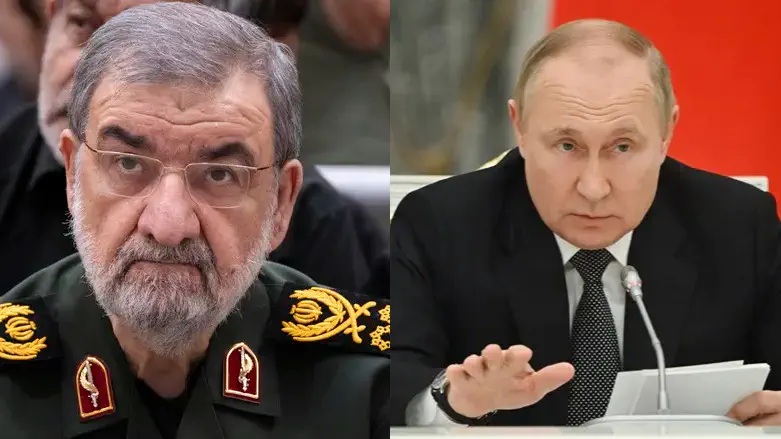
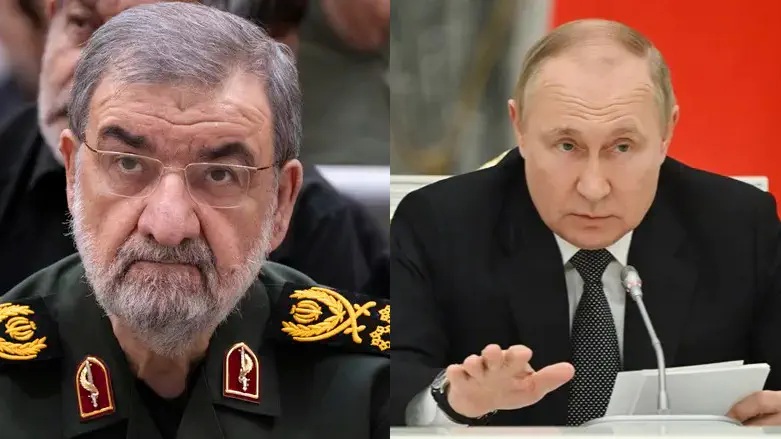
Russian President Vladimir Putin held an unannounced meeting Thursday with Iran’s top national security official, Mohsen Rezaei, who arrived in Moscow carrying a personal message from Iranian Supreme Leader Mojtaba Khamenei, as the two countries intensified discussions over regional security, military cooperation, and a proposed natural gas pipeline.
The Kremlin confirmed the meeting through spokesman Dmitry Peskov, according to Russia’s Interfax news agency. Iranian state television reported that Rezaei personally delivered Khamenei’s communication to Putin, although neither government disclosed its contents.
Following the Kremlin talks, Rezaei said the discussions centered on developments in the Middle East, particularly efforts to establish new regional security arrangements following the military conflict involving Iran and the United States.
According to the Iranian official, Khamenei had instructed him to deliver the message to Putin without delay, reflecting the importance Tehran attached to the meeting.
Rezaei said Putin expressed support for a regional security framework that would exclude outside powers, an approach the Iranian official described as consistent with China’s position.
The Russian leader was also briefed on a recent four-nation meeting held in Tehran, which Rezaei said Putin welcomed as a constructive diplomatic initiative.
Rezaei further claimed that Putin had indicated Russia’s readiness to assist efforts to bring the conflict to an end, although no specific peace proposal or agreement was announced.
Economic cooperation was another major subject of the discussions, with Rezaei raising Iran’s ongoing natural gas shortages and the possibility of constructing pipelines to transport Russian gas into Iranian territory.
Such a project could deepen the energy relationship between Moscow and Tehran at a time when both governments are seeking to strengthen their economic and strategic ties.
The visit followed a telephone conversation between Putin and Rezaei on Monday, during which they reviewed international developments and the situation in the Middle East.
Iran’s official IRNA news agency reported that the two governments reaffirmed their commitment to continuing strategic cooperation under understandings established by their respective leaders.
Photographs released from Thursday’s Kremlin meeting showed Putin accompanied by senior foreign policy adviser Yuri Ushakov and Russian military intelligence chief Igor Kostyukov, according to Reuters.
The presence of Russia’s military intelligence chief came amid fresh reporting about possible Russian weapons supplies to Iran.
The Financial Times reported Thursday that Russian defense industry records point to an agreement to supply Iran with 90 launchers for precision-guided missiles carried by attack helicopters. The weapons are designed for use with Russia’s LMUR missile system, which has been employed extensively during the war in Ukraine.
The production documents, covering 2024 and 2025, identify the purchaser by the designation “K-10,” a code that other Russian records reportedly associate with Iran. The documents do not establish whether the equipment was ultimately delivered.
The reported arrangement adds to evidence of expanding military ties between Russia and Iran. Previous investigations have described Russian assistance with Iranian supersonic cruise missile development and agreements involving advanced portable anti-aircraft weapons.
Moscow and Tehran have maintained frequent high-level contacts in recent months. Putin hosted Iranian President Masoud Pezeshkian in Moscow on October 27, while Iranian Foreign Minister Abbas Araghchi met the Russian president in St. Petersburg in April.
During that earlier meeting, Putin acknowledged receiving a previous communication from Khamenei and reaffirmed Moscow’s commitment to maintaining close strategic relations with Iran.
The latest discussions come as Washington considers whether to resume military operations against Tehran. President Trump has indicated that he has not made a final decision about additional strikes, while suggesting that Iran remains interested in reaching a negotiated settlement.
The immediate diplomatic obstacles include the future of the Strait of Hormuz, American sanctions, the blockade of Iranian ports, and disagreements over Tehran’s nuclear activities.