Rav Dov Landau Refuses to Back Netanyahu, Says ‘He Lied to Us’ as Degel HaTorah Opens Door to Eisenkot

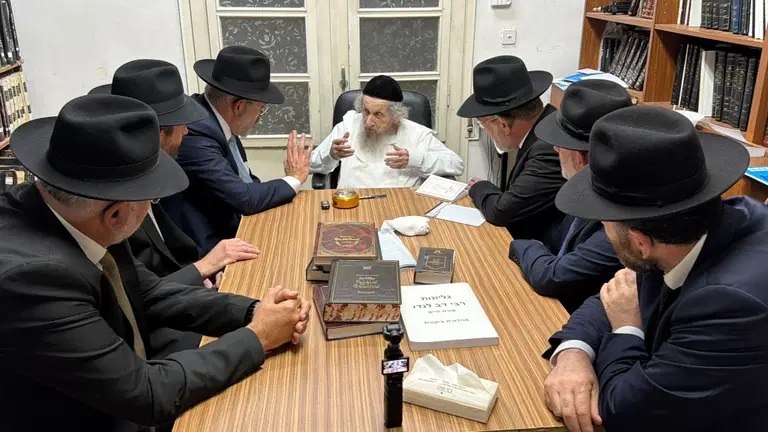
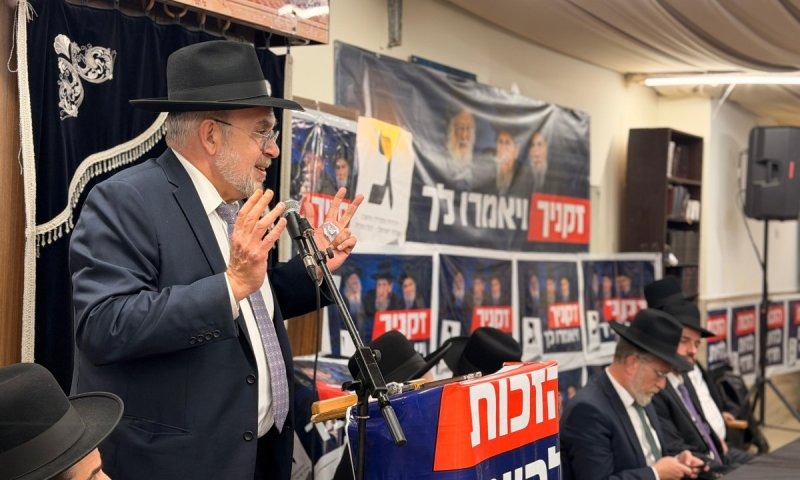
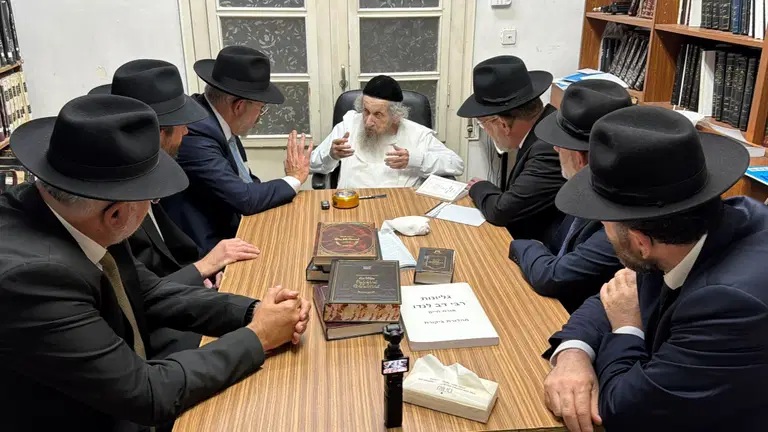
In a dramatic development that could reshape Israel’s post-election coalition negotiations, Maran Rav Dov Landau, rosh yeshiva of Slabodka, has reportedly refused to authorize United Torah Judaism to recommend Prime Minister Binyamin Netanyahu for another term, declaring that the prime minister had betrayed the trust of the chareidi leadership.
According to sources, UTJ chairman MK Yaakov Asher personally approached Rav Landau after coming under sustained pressure from Netanyahu and his associates to reverse the party’s decision not to endorse any candidate during consultations with President Isaac Herzog.
Netanyahu reportedly spoke with Asher several times in an effort to persuade him to change the party’s position. Asher eventually agreed to bring the matter before Rav Landau, visiting the rosh yeshiva at his home and requesting permission to recommend Netanyahu.
During the meeting, Asher reportedly argued that the recommendation would carry little practical significance and would not prevent UTJ from simultaneously conducting negotiations with Gadi Eisenkot, who is attempting to assemble an alternative governing coalition.
Rav Landau, however, rejected the request.
“I don’t believe him. He lied to us, so how can we recommend him?” the rosh yeshiva reportedly told Asher, instructing him not to endorse Netanyahu.
The refusal represents a significant setback for Netanyahu, whose longstanding political alliance with the chareidi parties has been severely strained by the failure to resolve the status of yeshiva students facing military conscription.
A senior Degel HaTorah official told Kikar HaShabbat that the party’s position should not have come as a surprise, explaining that Rav Landau had explicitly warned before the elections that the movement was no longer committed to any political bloc.
“On the eve of the elections, the rosh yeshiva, Rav Dov Landau, made it absolutely clear that we are not part of any bloc,” the official said. “Unfortunately, the political establishment, and particularly Likud, did not take us seriously. Now they are seeing those statements translated into action.”
The official emphasized that Degel HaTorah’s political decisions would be determined exclusively by the needs of the olam hayeshivos, rather than loyalty to Netanyahu or his opponents.
“We are not part of the Netanyahu bloc, but it is important to clarify that we are also not part of the change bloc. We belong to only one bloc: the bloc of Torah learners, and our only mission is to secure the status of yeshiva students.”
Perhaps the most consequential aspect of the party’s emerging position is its willingness to consider cooperation with Eisenkot, even if doing so would help establish a government outside the traditional right-wing and chareidi alliance.
The senior Degel HaTorah official said the party would not automatically reject an arrangement with Eisenkot if he could secure agreement among his coalition partners on legislation protecting yeshiva students from conscription.
“If Eisenkot can bring his entire bloc to support a law acceptable to the gedolei Yisroel, we certainly would not rule out such cooperation,” the official said.
“We are not blindly following Netanyahu, and we have not entered into any unbreakable marriage with him. We are looking for a real, substantive solution for Torah learners. Now the only question remaining is whether Gadi can bring his bloc to support such a law.”
According to the report, senior figures in the anti-Netanyahu camp are exploring a political arrangement under which UTJ would provide Eisenkot with a parliamentary safety net, potentially allowing him to establish a government without formally joining the coalition.
Under one scenario being discussed, UTJ’s cooperation would reduce Netanyahu’s effective parliamentary bloc to 46 seats while increasing Eisenkot’s support to 55 seats. The chareidi party would demand an agreed-upon draft law and formal protections for yeshiva students in exchange for abstaining during the government’s inauguration vote.