Blue Wave Sweeps Democrats Into Control Of House And Senate; What It Means For The Rest Of Trump’s Term

Click here to join the official TLS Community:
A sweeping Democratic wave has ended Republican control of Congress, with voters handing Democrats both the House and Senate and sharply narrowing President Donald Trump’s room to advance his agenda during the final two years of his term.
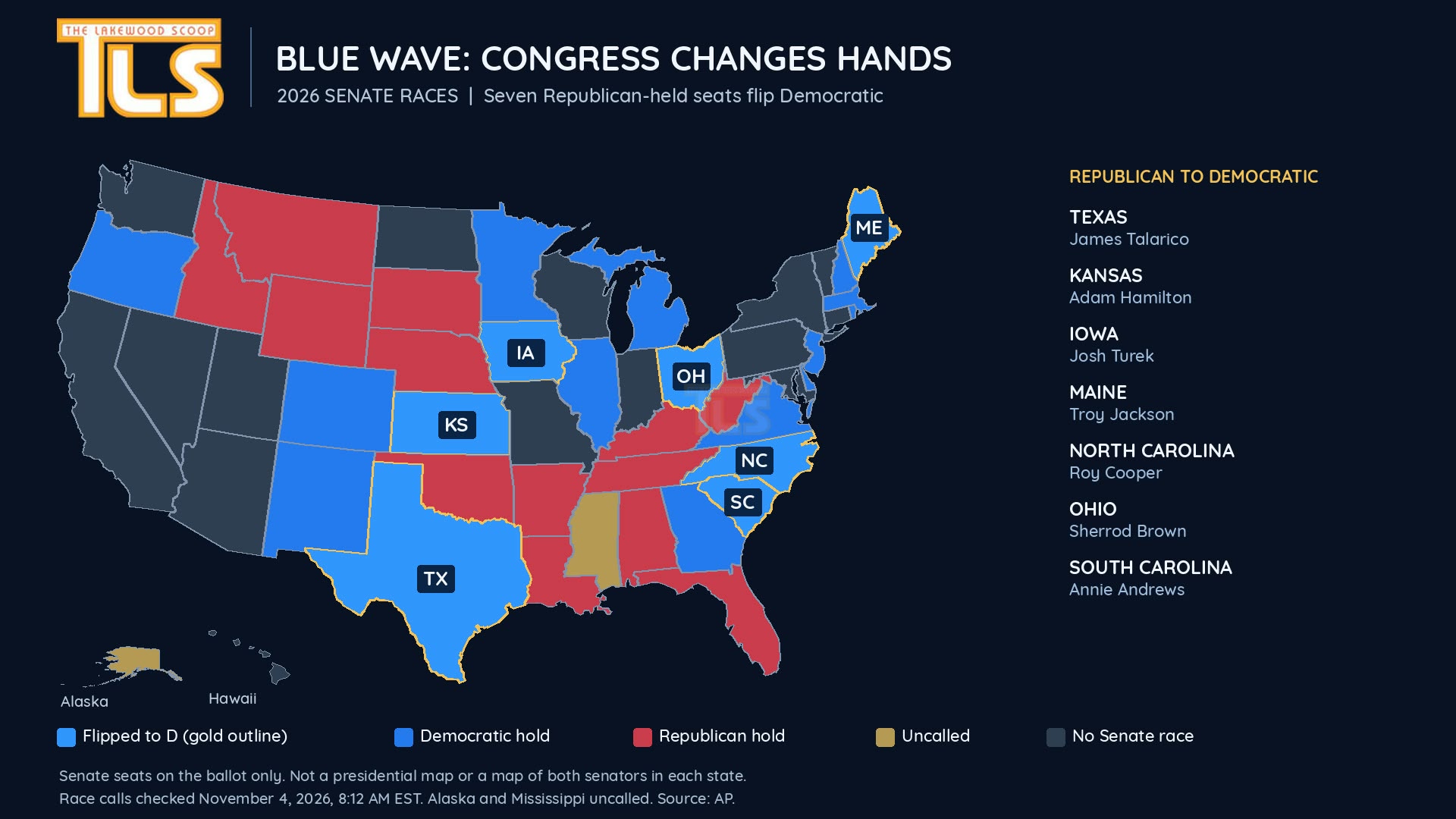
The results reached well beyond the usual battlegrounds. Democrats flipped seven Republican-held Senate seats, including Texas, Kansas and South Carolina, while also winning Iowa, Ohio, Maine and North Carolina. They held their Senate seats in Georgia and Michigan, closing off two of the GOP’s most important opportunities to limit the damage.
As checked this morning at approximately 8:12 AM EST, the national race-call tally showed the Democratic side with 54 Senate seats and Republicans with 44, with Alaska and Mississippi still uncalled. In the House, 228 races had been called for Democrats and 139 for Republicans, with 68 still uncalled. Those are called-seat totals, not the final size of either party’s majority. Democrats had already passed the 218 seats needed to control the House.
The outcome is a major setback for Trump, but it does not remove him from office, cancel his existing policies or give Democrats unchecked power. It changes who writes legislation, who runs congressional committees and who decides whether his nominees receive Senate approval.
In Texas, Democrat James Talarico defeated Republican Ken Paxton. In Kansas, Adam Hamilton won the seat held by Republican Roger Marshall. Iowa elected Democrat Josh Turek over Republican Ashley Hinson, and North Carolina elected former Democratic Gov. Roy Cooper over Republican Michael Whatley.
Ohio sent former Democratic Sen. Sherrod Brown back to Washington in the special election for the seat held by Republican Jon Husted. In Maine, Democrat Troy Jackson defeated longtime Republican Sen. Susan Collins. South Carolina elected Democrat Annie Andrews, completing the seven-seat shift.
Republicans did retain seats elsewhere, including Nebraska, where Sen. Pete Ricketts defeated independent challenger Dan Osborn, and Montana, where Republican Kurt Alme won. The wave was broad, but it was not a Democratic sweep of every competitive race.
Once the new Congress takes office in January, Trump will no longer have Republican majorities in either chamber to move his priorities. Major new tax, spending and domestic-policy legislation will need Democratic cooperation. A president cannot enact a new federal law simply by issuing an executive order.
Democratic control of the Senate also changes the outlook for judicial and executive-branch appointments that require confirmation. Trump can still nominate judges and officials, but the Senate can reject them or decline to move them forward. That is a significant change from governing with a Senate controlled by his own party.
In the House, Democratic control puts the party in charge of committees and the legislative agenda. Democratic leader Hakeem Jeffries is positioned to seek the speakership, although the new House must formally elect its speaker. Committee control also gives Democrats a platform for investigations, hearings and demands for administration records.
Trump remains president through the end of his term. He retains executive authority within the limits of the Constitution and federal law, including directing federal agencies, conducting diplomacy and issuing lawful executive orders. Congressional control does not automatically reverse actions already taken by his administration.
He can also veto legislation. Overriding a veto requires a two-thirds vote in both chambers, a much higher threshold than winning an ordinary majority. Under current Senate rules, most legislation also faces a 60-vote threshold to end debate, with exceptions. A Democratic majority therefore does not mean every Democratic proposal can become law.
Funding the government will require negotiation. Congress controls appropriations, while the president can veto spending bills. That creates pressure for deals and the possibility of standoffs, rather than allowing either side to govern alone.