Nearly $3 Trillion Wiped Out as Democrats’ Midterm Sweep Sparks Historic Market Selloff

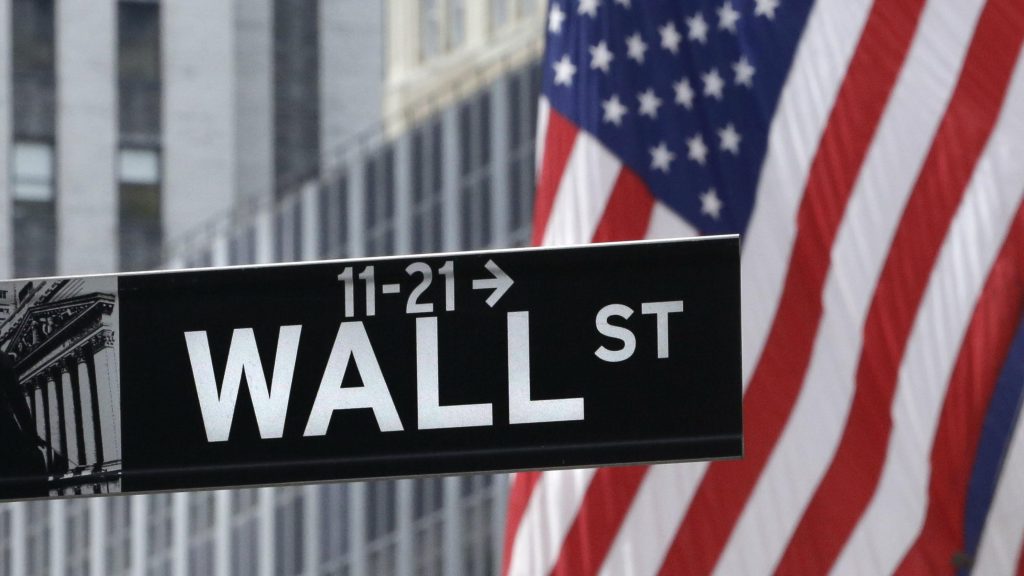
Wall Street suffered a staggering collapse Thursday, with nearly $3 trillion erased from the value of S&P 500 companies as investors reacted to the Democrats’ sweeping midterm election victories and growing fears that new restrictions on artificial intelligence infrastructure could derail the technology boom.
The selloff, which followed a powerful post-election rally just one day earlier, sent all three major stock indexes sharply lower and delivered particularly devastating losses to technology companies whose valuations have soared on expectations of continued investment in artificial intelligence.
Companies in the S&P 500 collectively lost approximately $2.9 trillion in market capitalization, while Nasdaq-listed firms shed roughly $2.5 trillion, according to the New York Post. Both figures represented record single-day declines in dollar terms. The Nasdaq also entered correction territory, generally defined as a decline of at least 10% from a recent peak.
The Dow Jones Industrial Average plunged 1,833 points, or 3.44%, finishing at 51,523.06. The decline more than erased Wednesday’s 1,500-point surge, which had marked the index’s strongest session in 18 months.
The technology-heavy Nasdaq Composite sank 5.52% to 24,315.00, while the S&P 500 dropped 4.36% to 7,353.73.
The losses were particularly painful for Americans with retirement accounts heavily invested in stocks. Ken Mahoney, CEO of Mahoney Asset Management, estimated that some 401(k) accounts could have declined by approximately 4% in a single session, depending on their investments.
Mahoney pointed to a familiar Wall Street expression to illustrate the severity of the decline: “Markets always go up by the way of escalators, a little bit at a time. But when they go down, they go down by way of elevators – several floors at a time.”
The seven dominant technology companies collectively known as the Magnificent Seven lost approximately $1.04 trillion in market value Thursday.
Nvidia, the chipmaking giant at the center of the artificial intelligence expansion, suffered the largest dollar loss, shedding approximately $374 billion. Tesla lost roughly $161 billion in value, while Microsoft declined by $117 billion.
Apple’s market capitalization fell approximately $59 billion, followed by Meta at $58 billion, Amazon at $55 billion and Google parent Alphabet at $42 billion.
Other major technology companies experienced similarly steep declines. Broadcom shares plunged 10%, while Nvidia and Qualcomm each fell approximately 9%. Qualcomm’s losses followed a disappointing financial outlook reflecting rising expenses, despite earnings that exceeded analysts’ expectations.
Oracle shares dropped 7%, while companies specializing in leasing artificial intelligence computing capacity suffered even more pronounced declines. CoreWeave fell 10%, and Nebius plunged 15%.
David Bahnsen, chief investment officer at The Bahnsen Group, argued that the selloff reflected deeper problems with technology stock valuations that had developed long before Tuesday’s elections.
He attributed the correction to valuations that had become detached from economic fundamentals.
“Thursday’s market action is what happens when euphoria and hype become the reason why stocks go up, rather than fundamentals, and that’s exactly what has been happening with tech stocks,” Bahnsen said.
Investors have increasingly questioned whether technology companies can justify their enormous market valuations as they pour billions of dollars into data centers, advanced computer chips and other artificial intelligence infrastructure.
Several major companies have continued to increase spending despite pressure on cash flow and uncertainty about when their investments will produce sufficient profits. Corporate executives have maintained that the extraordinary expenditures will eventually generate substantial returns.
Political opposition to data centers has intensified as communities raise concerns about electricity prices, water consumption, noise and the enormous demands these facilities place on local power grids. Those concerns became a significant issue in Tuesday’s elections, when Democrats captured both the House and Senate.
Meta President Dina Powell McCormick said Wednesday that data-center development had featured prominently in election-related polling, suggesting that opposition to the projects could complicate the technology industry’s expansion plans.