WHERE DID THEY GO? Shas Loses Nearly 100,000 Votes as Former Spokesman Reveals Why Chareidi and Traditional Voters Abandoned Party

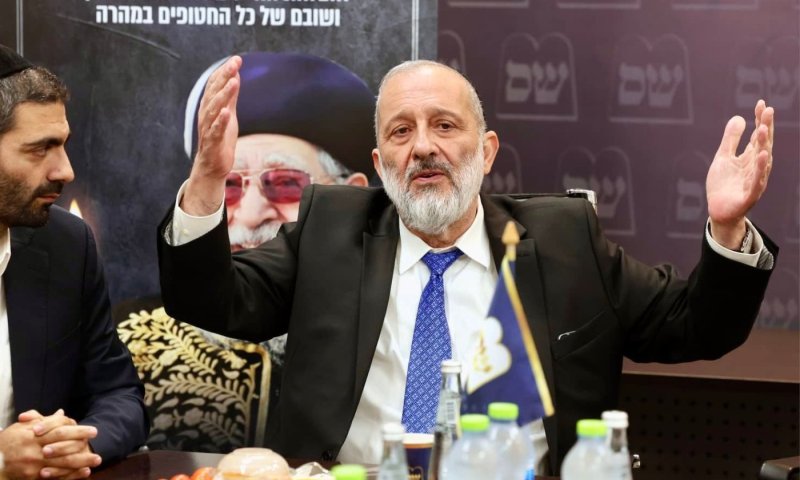
Shas is confronting a serious political crisis after losing nearly 100,000 votes in Israel’s latest Knesset elections, with former party spokesman Itzik Sudri warning that the party has alienated both its chareidi and traditional Sephardic constituencies. According to Sudri, approximately 30,000 chareidi voters abandoned Shas for United Torah Judaism, while another 70,000 traditional voters turned elsewhere, leaving the party struggling to reconcile the competing expectations of its supporters.
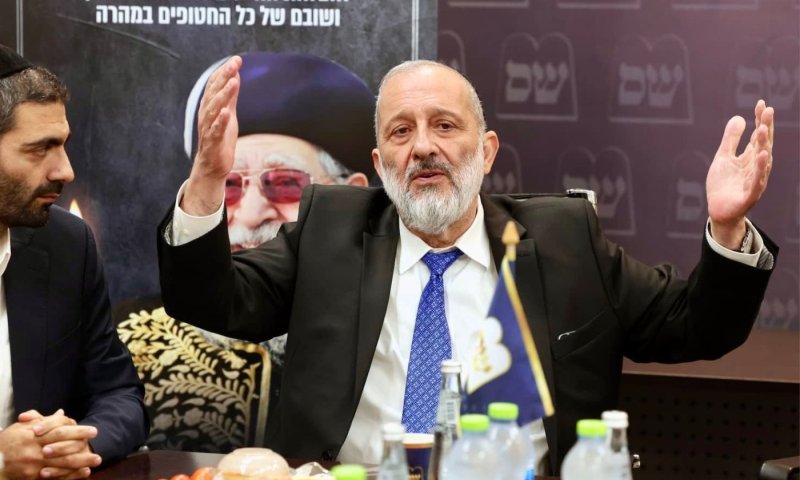
The election results saw Shas fall to six Knesset seats, securing 299,506 votes, while United Torah Judaism emerged with seven mandates. The outcome has prompted difficult questions about the future direction of the Sephardic chareidi party and the political strategy pursued by chairman Aryeh Deri.
Speaking with Avi Mimran on Kol Chai Radio’s central news broadcast, Sudri, who previously served as Shas spokesman and currently works as a commentator on chareidi affairs for Channel 16, offered an explanation for the party’s dramatic electoral decline.
“30,000 chareidim voted for United Torah Judaism, more or less, looking for the more chareidi option, while 70,000 traditional voters looked for the more traditional side,” Sudri said.
His assessment suggests that Shas has found itself caught between two distinct groups of supporters, each increasingly dissatisfied with the party for opposite reasons. Chareidi voters, he argued, felt Shas had failed to maintain a sufficiently strong chareidi identity, while traditional Sephardic voters believed the party had moved too far toward the chareidi sector at the expense of their own concerns.
Unlike United Torah Judaism, whose electorate consists overwhelmingly of chareidi voters, Shas has historically attracted a broad coalition of Sephardic chareidim, yeshiva graduates, baalei teshuvah, and traditional Jews. That diverse electoral base helped establish Shas as a major political force, but Sudri believes the party has struggled to maintain the delicate balance necessary to retain those voters.
He attributed part of the decline to Shas’ close political identification with Prime Minister Binyamin Netanyahu, as well as growing public criticism of the chareidi community and the party’s difficulty presenting a clear position on the military draft controversy.
Sudri was particularly critical of the party’s public messaging concerning the status of yeshiva bochurim and avreichim, arguing that Shas failed to communicate a coherent position during a campaign dominated by the conscription debate.
According to Sudri, the party’s handling of the issue created difficulties among traditional Sephardic supporters, many of whom have children serving in the IDF and felt increasingly uncomfortable with rhetoric they perceived as dismissive of military service.
“The traditional Shas voter, whose children, as he says, are in the army, hears constant disparagement of those serving in the military, and he says: I want to vote for a party where I’m a first-class citizen, not a second-class citizen,” Sudri explained.
At the same time, he suggested that more strongly chareidi voters were drawn toward United Torah Judaism, which they regarded as taking a firmer position on issues affecting the Torah community.
Despite the substantial losses, Sudri emphasized that Shas continues to represent both sectors. He estimated that approximately 200,000 Sephardic chareidim and 100,000 traditional voters supported the party in the latest election, demonstrating that its original electoral coalition has not disappeared entirely.
Sudri also expressed confidence that Deri, who has yet to deliver an extensive public assessment of the election results, remains the person best equipped to rebuild Shas and restore its political strength.
“The very person who is truly best suited to restore the glory of Shas, to return the crown to its former glory, is Aryeh Deri,” he said.
He explained that Deri’s longstanding familiarity with the different communities that make up the Shas electorate gives him a unique ability to reconnect with voters who have drifted away from the party.