Sean Hannity Blames Trump’s Iran Conflict and Rising Gas Prices for Republican Election Disaster

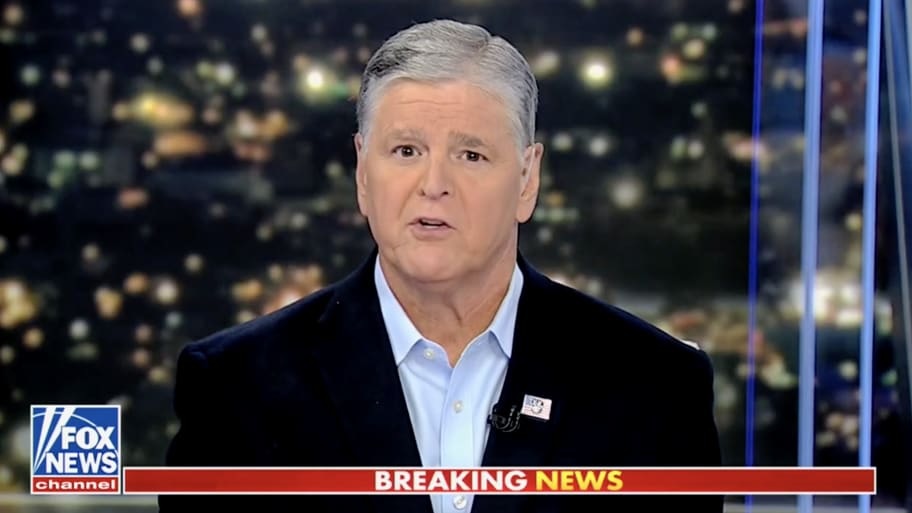
Fox News host Sean Hannity, one of President Donald Trump’s most prominent supporters, acknowledged that the war with Iran had played a major role in the Republican Party’s devastating midterm election losses, arguing that the results would have been dramatically different had the United States not entered the conflict.
Appearing on Fox News’ election-night coverage as Democrats scored major victories across the country, Hannity conceded that the war, rising gasoline prices, and public dissatisfaction with the economy had created serious political difficulties for Republicans, even as he defended Trump’s policies and predicted that the president would ultimately be vindicated.
The striking assessment came during a discussion with Fox News anchor Bret Baier, who asked whether the election would have unfolded differently without the military confrontation with Iran.
“If we as a country did not go into the war in Iran, and that was not on the agenda tonight, is this a much different race tonight?” Baier asked.
“I think 100%. I don’t think there’s any doubt about it,” Hannity responded.
The admission was particularly noteworthy coming from Hannity, who has consistently defended Trump’s presidency and supported his administration’s approach to national security.
Hannity argued that although he believed the president’s economic policies were fundamentally sound, voters were judging Republicans according to their immediate financial circumstances rather than the administration’s longer-term objectives.
He acknowledged a point raised by Democratic commentator Harold Ford Jr., who argued that favorable economic statistics mean little when Americans do not personally experience improvements in their financial situation.
Hannity said he agreed with economist Larry Kudlow’s support for the administration’s economic principles but recognized that voters’ perceptions of their own financial well-being were ultimately decisive.
The Fox News host also acknowledged that some of the administration’s immigration enforcement operations had generated negative public reactions, particularly after Democrats highlighted videos showing controversial enforcement actions.
“Americans are good people with a heart, and they didn’t like some of what they saw,” Hannity said.
He then returned to Iran, arguing that the administration’s military campaign could ultimately benefit future generations but that its immediate economic consequences had damaged Republicans politically.
“I would argue on Iran, there was, unfortunately, it’s the best thing for our children and grandchildren, but higher gas prices, how people feel, I think is the more dominant feeling force right now,” Hannity said.
His remarks reflected a central difficulty facing the administration: Even voters who support a tough approach toward Iran may be unwilling to accept the economic consequences of a prolonged military confrontation.
The conflict has contributed to higher energy costs and increased concerns about inflation, issues that became major themes in Democratic campaigns across the country.
Hannity nevertheless insisted that the president’s policies would eventually produce positive results, comparing Trump’s political difficulties to those experienced by previous presidents who suffered major midterm setbacks.
“I really believe in the policies. I think the president will be proven correct, just like Reagan was, and Clinton in a lot of ways was, and even Obama,” he said.
During another portion of the election-night discussion, Hannity pointed to the history of presidents whose parties experienced substantial congressional losses before their political fortunes improved.
“Midterms are very, very predictable and the more dominant a personality that a president is, the more dramatic a loss will be in a midterm,” he argued.
He cited Ronald Reagan’s recovery following Republican losses in 1982, Bill Clinton’s political comeback after the 1994 Republican wave, and Barack Obama’s reelection following the Democratic Party’s heavy losses in 2010.
However, unlike those presidents, Trump is serving his second elected term and is constitutionally barred from seeking another, meaning the political implications of Tuesday’s results will fall heavily on Republicans preparing for the 2028 presidential election.