Deri Calls for Cheshbon Hanefesh as Shas Loses Five Seats, Insists Party Has Not Collapsed

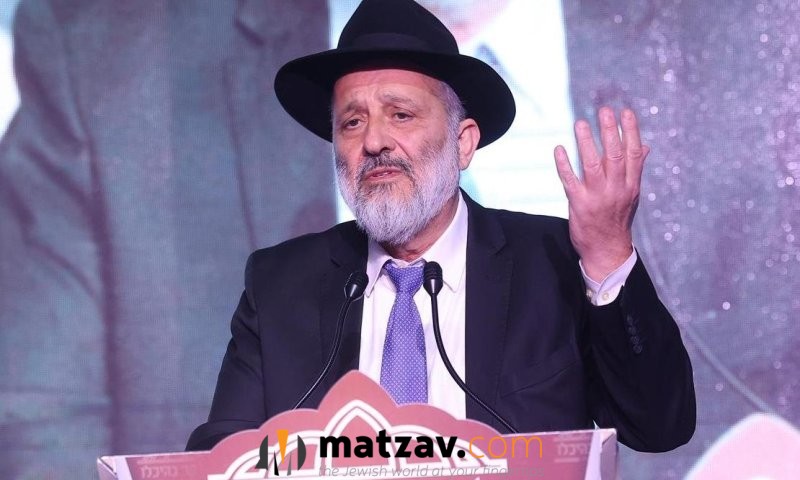
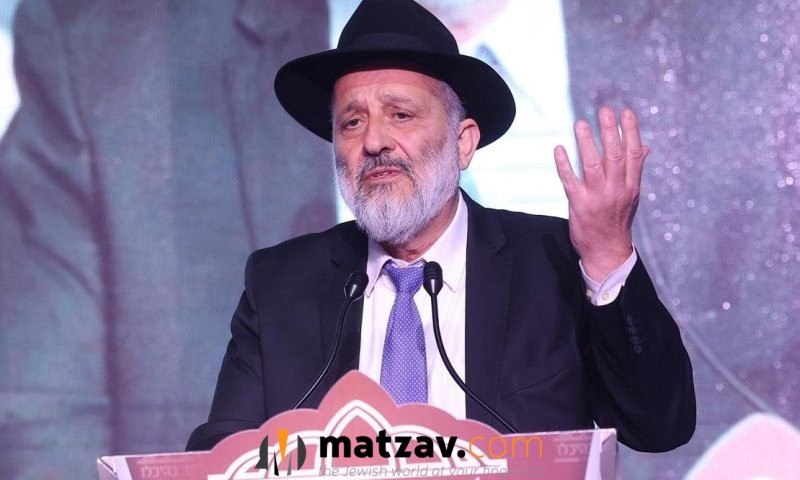
Shas chairman Aryeh Deri acknowledged Thursday that his party’s disappointing performance in Israel’s Knesset elections requires a serious cheshbon hanefesh, pledging to examine the reasons behind the loss of five seats while insisting that the movement remains strong and united despite the setback.
Speaking at a special Shas faction meeting at the party’s headquarters, Deri addressed the election results that saw Shas fall from 11 Knesset seats to six, rejecting suggestions that the outcome represented the collapse of the Sephardic chareidi party.
The gathering, attended by Shas Knesset members and representatives from communities throughout Eretz Yisroel, opened with the recitation of Mizmor LeSodah, as Deri sought to place the election results in the context of the challenges the movement has faced in recent years.
“We must thank the Ribbono Shel Olam for both the difficult times and the good times, even when we cannot understand His cheshbonos,” Deri said at the outset.
“Boruch Hashem, 300,000 Yidden answered the call of the Moetzes Chachmei HaTorah and were not influenced by the relentless campaign of incitement directed against us over the past three years, both from within and from outside.”
Deri maintained that the campaign against Shas had been unlike anything he had experienced during his decades in public life, accusing opponents of exploiting the party’s conduct during wartime to weaken its standing among voters.
“I have been involved in these political battles for decades, and there has never been anything like this. During the war, they took advantage of the restraint and sense of responsibility we demonstrated to attack the movement and its leaders. They even attempted to divide our Torah leadership,” he said.
According to Deri, political analysts had privately expressed doubts that Shas could withstand the sustained criticism and internal pressures it faced.
“Experts told me they did not believe it was possible to survive such a campaign. It is truly a neis, and for that we must thank the Ribbono Shel Olam.”
The Shas chairman argued that the party’s greatest achievement was preserving its organizational and rabbinic unity despite the election losses and the intense political pressures surrounding the campaign.
“Not only did we survive, but we preserved something that hardly exists in any other party: one Torah leadership, one political leadership, one Knesset faction, and all our representatives in the local authorities united. This cannot be taken for granted. For all of this, we recited Mizmor LeSodah.”
Deri expressed appreciation to the Moetzet Chachmei HaTorah and the thousands of party activists who worked to mobilize supporters across the country.
“I want to thank, from the bottom of my heart, the Moetzet Chachmei HaTorah and the thousands of men and women activists across the country who worked with extraordinary mesirus nefesh for the movement,” he said.
“The result we achieved was with siyata diShmaya and thanks to their hard work and dedication. Their efforts were not in vain. Be’ezras Hashem, we will know how to justify the trust placed in us.”
Addressing critics who have portrayed the election as a devastating repudiation of his leadership, Deri insisted that the hundreds of thousands of votes received by Shas demonstrate that the party continues to command substantial support.
“Those who tried to destroy the movement rushed to celebrate its ‘collapse,’ but 300,000 votes is not a collapse,” he declared.
Deri pointed to the party’s history of electoral fluctuations, recalling that Shas had repeatedly recovered from political setbacks and challenges to its leadership.
“We have known ups and downs. Shas is a movement built on an idea and a derech. We started with four seats, reached 17, fell and rose again. We went through severe crises, lost our leader, Maran Rav Ovadia Yosef, and faced movements that competed against us.”