Rabbis Issue Stern Ruling Over Delayed Burial Of Murdered Israeli In Uman

JERUSALEM (VINnews) — A closed-door rabbinical meeting in Bnei Brak has produced a strongly worded ruling demanding the immediate burial of Rabbi Yitzchak Elmakayes, whose body has remained in Ukrainian authorities’ custody for 55 days. Rabbi Chaim Yosef David Weiss also accused individuals of misrepresenting his earlier ruling to justify delaying the burial.
The case surrounding the suspected murder of Rabbi Yitzchak Elmakayes in Uman, Ukraine, has taken a dramatic turn following a closed-door meeting of prominent rabbinical figures in Bnei Brak on Tuesday evening.
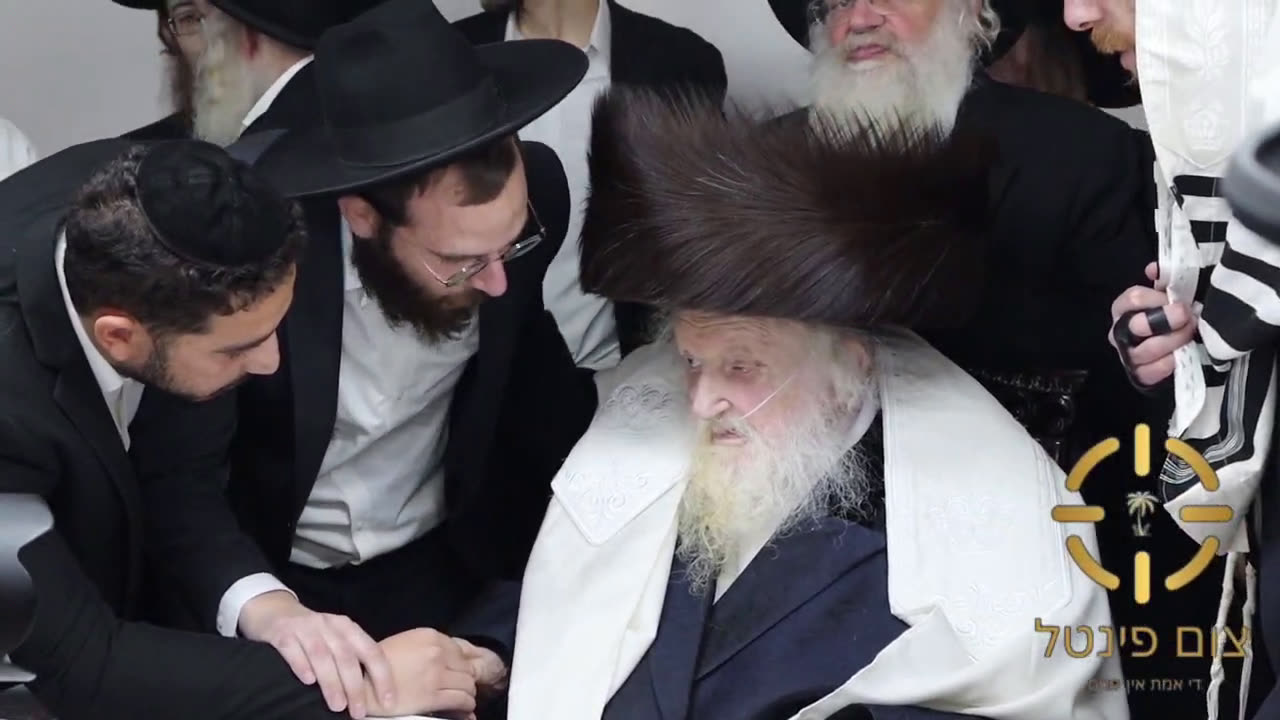
The meeting, held at the home of well-known community activist Rabbi Yehuda Yaakov, was attended by Rabbi Moshe Brandsdorfer, head of the Heichal Horaah rabbinical court, and Rabbi Chaim Yosef David Weiss, known as the Chid”u, the rabbinical court leader of Satmar in Antwerp, who is currently visiting Israel.
According to the account presented at the meeting, shortly after Rosh Hashanah, activists approached Rabbi Weiss claiming to possess information indicating that the perpetrators of the suspected murder were Jewish. They argued that a brief delay in burial was necessary to allow Ukrainian authorities to conduct their investigation. Rabbi Weiss agreed to a delay of just two days.
However, the activists allegedly held on to his letter for three weeks before publishing it after the holiday period, removing its date and creating the impression that he had issued a ruling permitting the body to remain unburied for nearly a month. Furthermore, when Rabbi Weiss subsequently issued another letter approximately a month ago explicitly prohibiting any further delay in burial, the activists allegedly withheld the document and never made it public.
Following the revelations, the rabbis issued a forceful halachic ruling condemning the continued delay.
The ruling states: “We consider it our obligation to make clear the unequivocal position of Torah law: There is absolutely no permission to make any demands or requests that would cause a delay in the burial. Every possible effort must be made to expedite his burial in a Jewish cemetery immediately, in Ukraine, without any further delay. It is strictly forbidden to postpone the matter, particularly when such a delay is caused by improper considerations, whether directly or indirectly.”
Rabbi Weiss added a handwritten statement warning that anyone involved in delaying the burial for personal or other considerations would ultimately be held accountable. He also categorically rejected the claim that he had authorized a delay of more than one or two days, writing: “The claim that I permitted him to remain unburied for more than a day or two is a lie attributed to me.”
The dispute also concerns where Elmakayes should ultimately be buried once Ukrainian authorities release his body. Elmakayes, who was a resident of London, has relatives who would like his remains transferred to the British capital for burial. However, Rabbi Weiss’s detailed halachic ruling concludes that he should instead be buried in Uman, near the location where his body was found.
The ruling, now being published in full for the first time, examines several traditional Jewish legal sources concerning the proper location of burial and the prohibition against unnecessarily transferring a deceased person from one place to another.
Rabbi Weiss cites the Shulchan Aruch, which rules that a deceased person should generally be buried in the city where he died rather than being transferred elsewhere. He also draws on the writings of the Shach, citing the Tashbetz, regarding the importance of preserving the dignity of the deceased and the significance of the place where the body is found.
The rabbi also addresses the argument that Elmakayes should be buried in London because his mother and brothers live there.