Chareidi Party Leader Admits Crushing Defeat, Reveals Even His Own Shul Barely Voted for Him


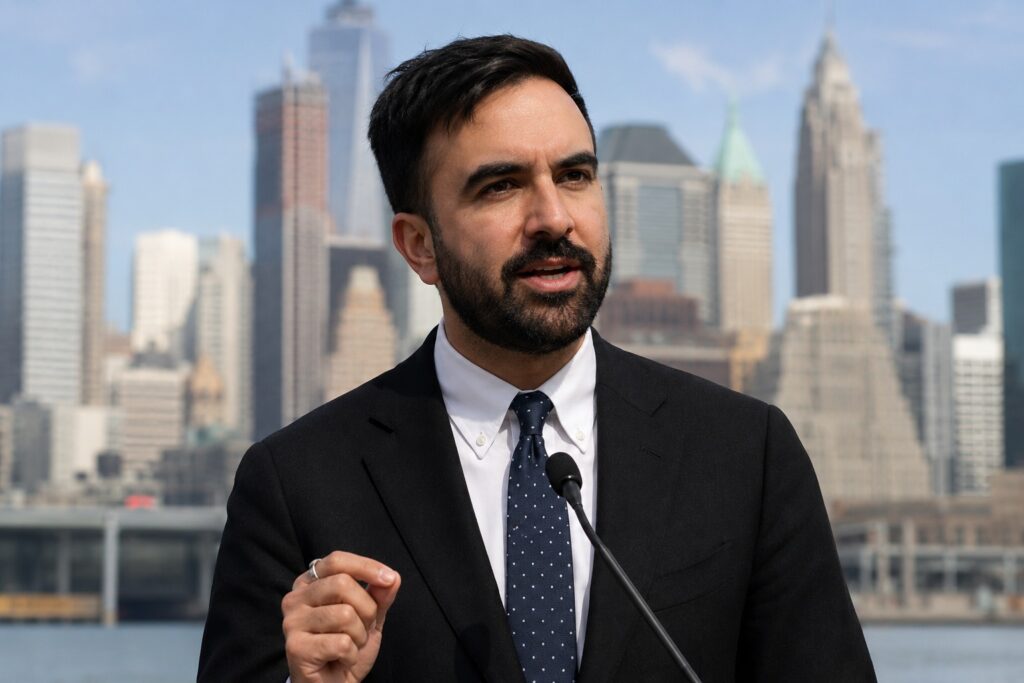
Motti Leitner, chairman of the newly established Hatzibur Hachareidi party, has publicly acknowledged the devastating failure of his party in Israel’s recent Knesset elections, revealing that even members of his own shul overwhelmingly declined to vote for him.
In his first interview since the election, conducted by Yishai Cohen of Kikar HaShabbat, Leitner admitted that his party’s performance fell far short of expectations, attracting only approximately 10,000 votes despite a campaign that reportedly cost 13 million shekels.
“Yes, I failed here. I thought we would exceed 20,000 votes, and in that respect, we failed completely,” Leitner acknowledged.
The party, which sought to represent working chareidim who feel inadequately represented by the established chareidi political parties, had entered the election with considerable publicity and expectations of a stronger showing.
Instead, its vote total left it nowhere near the electoral threshold required to enter the Knesset.
Leitner attributed the disappointing outcome primarily to voters’ fears that supporting his party would weaken the right-wing bloc and potentially help bring about a change in government.
“Eighty to ninety percent of our target audience was afraid of wasting their vote and preferred to vote for Religious Zionism, Otzma Yehudit, and Likud, or to return home to the chareidi parties,” he explained.
Perhaps the most striking admission concerned his own community in Beit Shemesh.
Leitner revealed that even among the families who know him personally and daven alongside him, support for his political venture was almost nonexistent.
“In my shul, out of 60 families, fewer than five families voted for me!” he said.
According to Leitner, many members of his community expressed personal admiration for him but ultimately decided that the political stakes were too high to support a party that appeared unlikely to cross the electoral threshold.
“People told me, ‘We love you, but the right-wing bloc is in danger,’” he recalled.
The party chairman also addressed criticism of his campaign’s messaging, which initially emphasized the need for greater political representation for working chareidim but later included increasingly pointed attacks on the established chareidi political leadership.
Leitner conceded that some of the campaign’s rhetoric had been unnecessarily confrontational.
“Most of the campaign was positive, but if there was a discordant note in the music that could have been avoided, the answer is yes, we made mistakes and erred. However, that was not the essence,” he said.
One of the most controversial aspects of the campaign was its enormous expenditure relative to the number of votes it ultimately received.
During the interview, Cohen confronted Leitner with the calculation that the party had spent approximately 1,300 shekels for every vote it received, based on campaign expenditures of 13 million shekels and a final tally of roughly 10,000 votes.
Leitner rejected the suggestion that the money had been wasted, arguing that the campaign had accomplished important objectives beyond winning seats in the Knesset.
He also drew a sharp distinction between his party’s privately funded campaign and the public funds used to support established political parties and their elected representatives.
“The 18 elected representatives of Shas and United Torah Judaism cost 350 million shekels of our tax money during the last term, and that money went down the drain,” Leitner charged.
“We, by contrast, spent 13 million shekels exclusively from private donations, and we do not have a single shekel of debt,” he said.
Leitner claimed that the donors who supported his campaign remained enthusiastic despite the disappointing election results.
“The donors are excited and tell me, ‘You accomplished in three months what others did not accomplish in 13 years.’ We brought the voice of working chareidim to a volume that cannot be ignored,” he said.